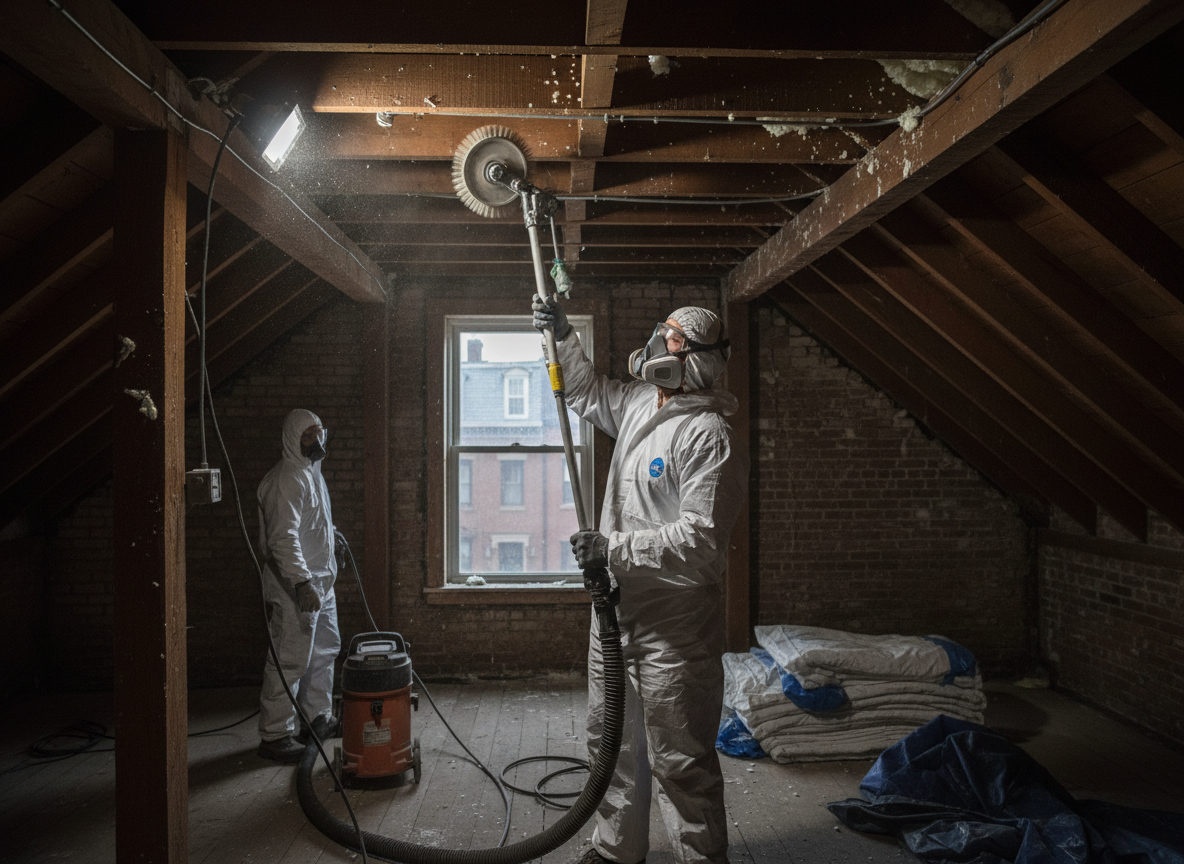
Boston's older housing stock, particularly Victorian terraces and Georgian properties around the town centre and near the River Witham, often features spray foam applied directly to roof undersides in lofts and attics. Lincolnshire's frequent rainfall and cold winters create condensation risks where foam meets unventilated brickwork, trapping moisture that leads to timber decay and mould growth behind the insulation. Removal requires careful separation of the foam without damaging original lath and plaster ceilings or exposing rafters to further water ingress during the process.
Edge cases in the Boston area include foam installed over electrical wiring in post-war semis along Spilsby Road or in converted farm buildings on the outskirts, where incomplete removal can leave residue that affects new insulation adhesion. Wet weather common from autumn through spring means crews must set up temporary containment quickly to prevent water tracking into living spaces below. Local building practices in Lincolnshire often left minimal roof ventilation, so extraction work must include checks for hidden damp that standard visual inspections miss until the foam is gone.
Regulation notes for Lincolnshire properties focus on safe disposal of removed foam material, which can contain older chemical formulations that require licensed waste handling. Homeowners in Boston frequently discover issues only after a leak or energy audit reveals poor performance, and rushed DIY attempts often worsen the problem by tearing foam into small particles that settle into floor voids. Proper extraction accounts for the county's clay-heavy soils that contribute to higher ground moisture levels rising into ground-floor walls connected to attic spaces.
Technician insight
In Boston, the thing that catches most people out with 24/7 Spray Foam Removal is how Victorian terraces near Strait Bargate often have foam covering original timber that has already started rotting from years of trapped damp during Lincolnshire's wet winters, so what looks like a straightforward peel turns into timber repairs once the layers come off.
Loft Foam Removal After Leak Report
A homeowner in a central Boston terrace reported water staining on ceilings during heavy winter rain. Inspection found spray foam trapping moisture against rafters with early mould. Removal exposed the affected timber, which was dried and treated before new insulation was advised. The space now allows proper airflow without hidden damp pockets.
How it works
- 1
Initial Assessment
Inspect the property in Boston to identify foam locations, depth, and any signs of moisture damage in lofts or wall cavities typical of local older homes.
- 2
Containment Setup
Install dust and debris barriers to protect living areas from particles, especially important in terraced houses where shared walls increase cross-contamination risks.
- 3
Foam Extraction
Remove the spray foam using mechanical methods suited to the substrate, taking care around wiring and rafters common in Lincolnshire properties.
- 4
Cleanup and Disposal
Clear all residue, vacuum voids, and handle waste removal in line with local requirements before restoring access to the space.
Pricing
Upfront quotes provided after inspection based on property specifics and access conditions.