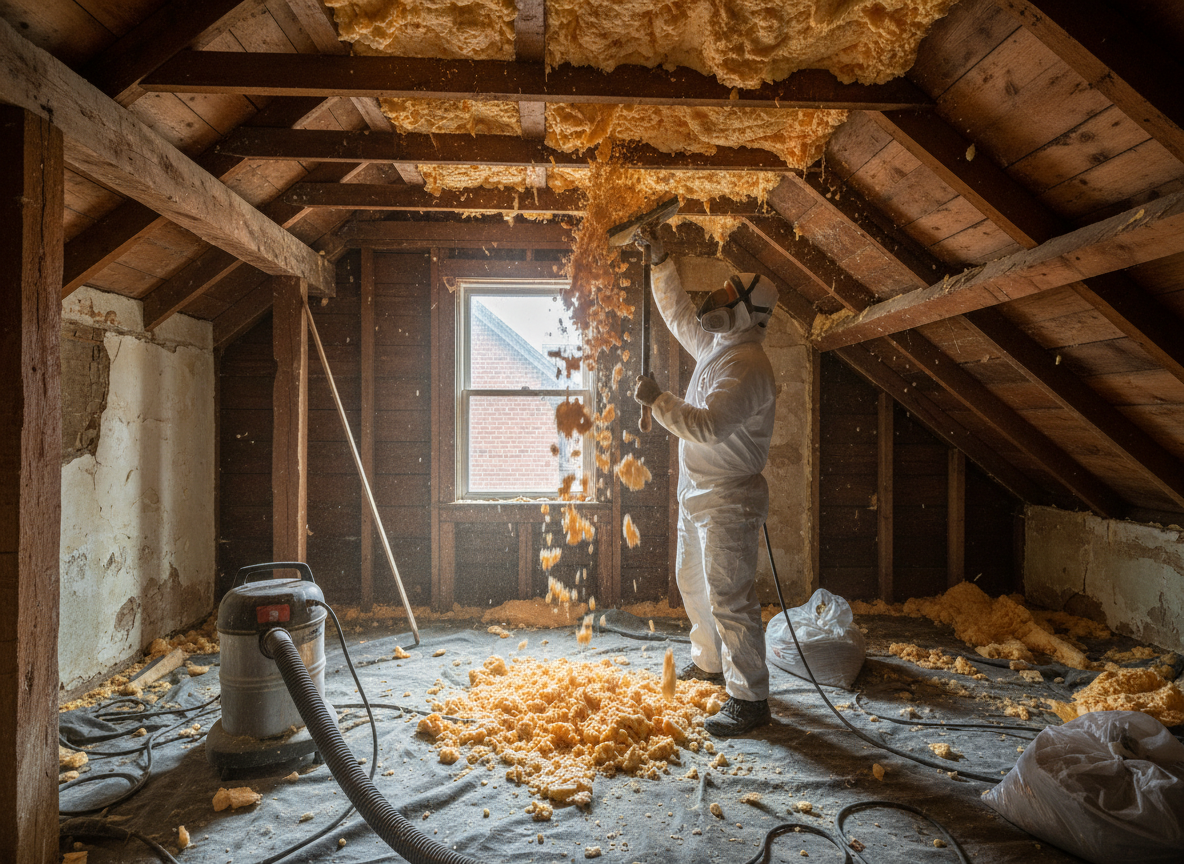
Boston's older housing stock, particularly Victorian terraces and early 20th-century brick homes near the River Witham, often received spray foam in lofts or under floors during past energy upgrades. Over time the foam can trap moisture against masonry, leading to rot in joists and poor ventilation in the damp Lincolnshire climate. Removal requires careful cutting, vacuum extraction and substrate drying before any new insulation can be considered, especially in properties where original timber has already started to degrade.
Work on these homes frequently involves tight roof voids above Strait Bargate and surrounding streets where access is limited and dust control is essential to protect remaining plaster and wiring. Crews must separate the foam from lath and plaster ceilings without collapse, then dispose of the material in line with local waste rules. Winter jobs add extra steps because cold temperatures slow adhesive breakdown and increase condensation risk once the foam is gone.
Homeowners in Boston sometimes discover foam was applied over existing insulation or electrical cables, creating hidden fire and moisture hazards. Proper removal includes inspecting for these overlaps, documenting the condition of the original structure, and advising on ventilation upgrades suited to the area's high water table and frequent rainfall. This prevents repeat problems that are common when foam is simply covered rather than fully extracted.
Technician insight
In Boston, the thing that catches most people out with Residential Spray Foam Removal is how quickly foam bonds to the damp brickwork common in fenland terraces; once removed you often find hidden rot along the Witham that needs addressing before any new work.
Loft Foam Removal in a Boston Terrace
Homeowners noticed musty smells and peeling paint in an older property near the town centre. Inspection showed spray foam had trapped moisture against the original rafters. The team extracted the foam section by section, dried the timber and confirmed the structure was sound before leaving the loft properly ventilated.
How it works
- 1
Site Assessment
Inspect the property, identify foam locations, check for hidden moisture or wiring issues typical in Boston homes.
- 2
Containment Setup
Seal work areas to control dust and debris, protecting living spaces in compact terraced houses.
- 3
Foam Extraction
Cut and remove foam in sections, using vacuum equipment suited to tight lofts and underfloor spaces.
- 4
Substrate Drying and Inspection
Dry exposed brick and timber, then check for rot or damage before handover.
- 5
Final Clearance
Remove all waste, clean the site and advise on next steps for the now-ventilated space.
Pricing
Cost varies with property age, foam thickness and access difficulty in Boston homes.