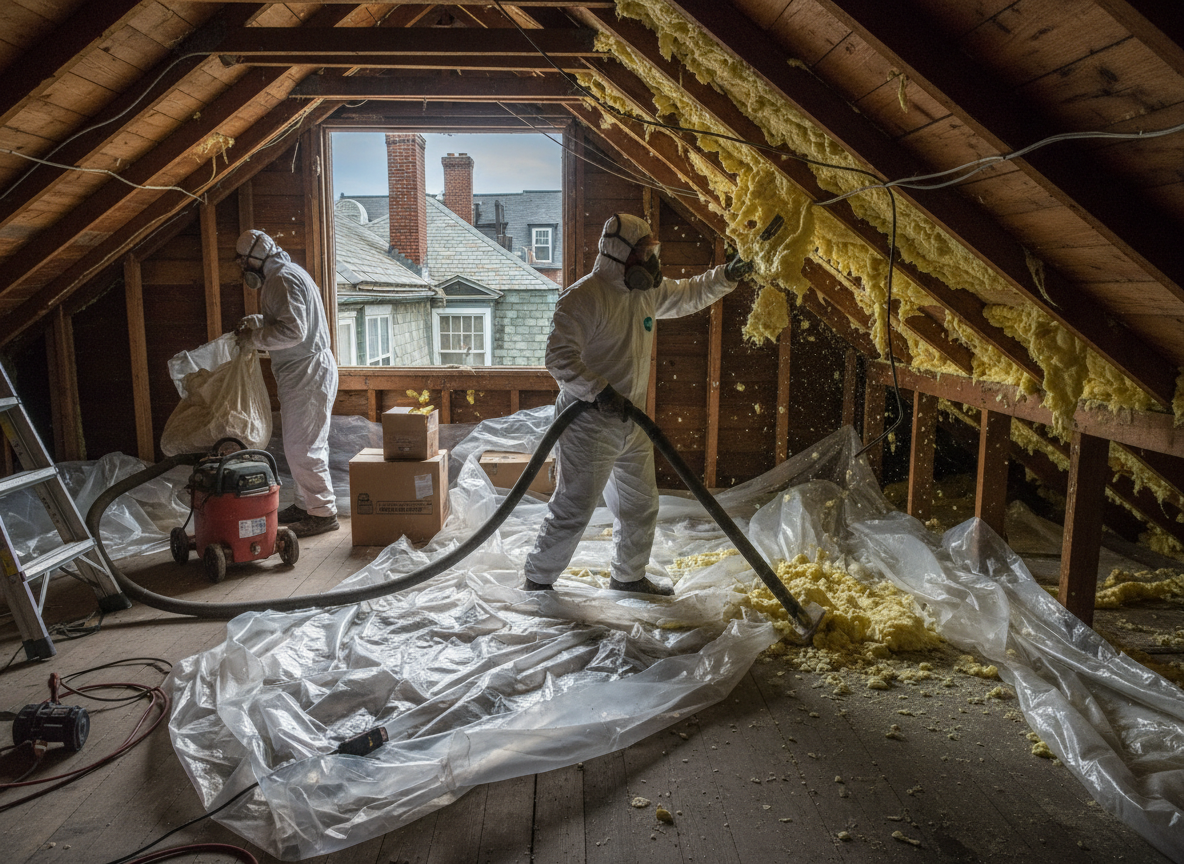
Attic spray foam removal in Boston requires careful handling of older properties common throughout Lincolnshire. Many homes around Strait Bargate and the town centre feature tight roof voids with limited access points, making full extraction more involved than newer builds. Spray foam often bonds tightly to timber joists and lathe, so crews must work methodically to avoid damaging historic ceilings below. Cold, damp winters in the area can leave residual moisture trapped beneath the foam, increasing the risk of rot if not fully addressed during removal.
Homeowners in Boston frequently encounter issues when foam was applied over existing insulation without proper ventilation checks. This creates hidden pockets that hold condensation, especially in properties near the river where humidity stays elevated. Removal crews must strip back layers completely, inspect for timber degradation, and ensure the space is left clean for future ventilation upgrades. Rushing the job here often leads to callbacks when mould reappears after the first wet season.
The process also involves managing dust and debris in confined attic spaces typical of Victorian and Edwardian terraces found across the Boston area. Each section must be cleared before moving to the next to prevent material from settling into living areas below. Local regulations around waste disposal add another step, requiring proper bagging and licensed haulage rather than standard skip use. Experienced teams know to check for hidden electrical runs and pipework before cutting begins.
Technician insight
In Boston, the thing that catches most people out with attic spray foam removal is how older terraced houses around the town centre trap moisture under the foam because of limited roof ventilation and proximity to the river. Homeowners often think a quick scrape will do, but the damp winters here mean any residue left behind leads to rot in the joists within a season.
Tight Access in a Boston Terrace
A homeowner in a Victorian terrace near Strait Bargate noticed musty smells after years of foam insulation. Inspection revealed foam bonded over damp timber with poor airflow. The team removed the foam in sections, cleared hidden moisture pockets, and left the void ventilated. The property stayed dry through the following winter.
How it works
- 1
Site Assessment
Inspect the attic space, identify foam type and depth, and check for moisture or structural concerns specific to Boston properties.
- 2
Preparation and Containment
Set up dust barriers and access routes to protect living areas below while working in tight Lincolnshire roof voids.
- 3
Foam Extraction
Remove foam in sections using appropriate tools, clearing all bonded material from joists and surfaces without damaging older timbers.
- 4
Cleanup and Disposal
Clear debris, bag waste for licensed disposal, and leave the attic ready for inspection or further ventilation work.
Pricing
Costs depend on attic size, foam thickness, and access difficulty in Boston homes; upfront quotes provided after inspection.