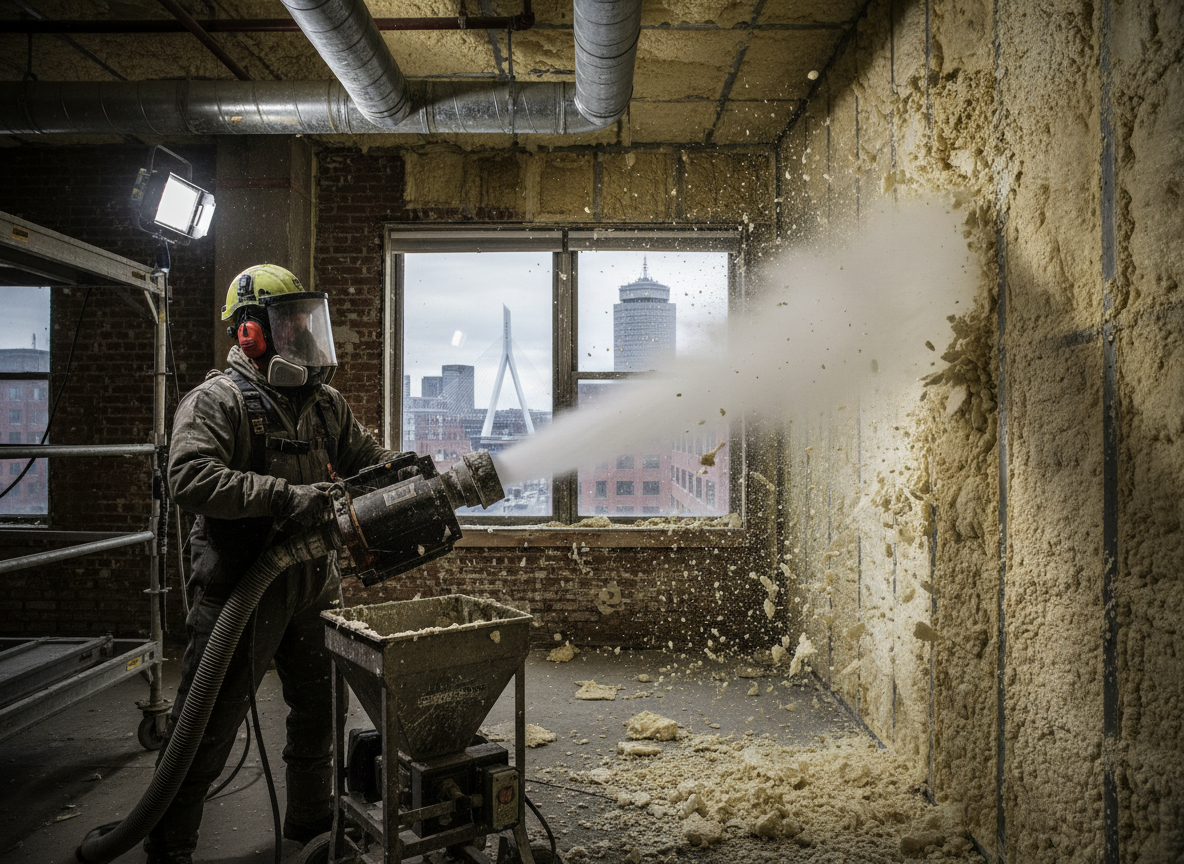
Dry ice blasting works by propelling solid carbon dioxide pellets at high velocity to break the bond between spray foam and underlying surfaces without abrasion or chemical residue. In Boston properties, this method suits older brick and timber constructions common around Strait Bargate and the market area where mechanical scraping risks damaging historic plaster or rafters. The process leaves no moisture behind, which matters in the flat fenland terrain where poor drainage already increases condensation risk in lofts and wall cavities.
Technicians must account for electrical wiring runs and ventilation ducts that older Boston homes often have routed through foam-filled spaces. Pellets sublimate on contact, reducing the chance of embedding particles into porous materials like lime mortar found in many pre-war buildings. Waste falls as dry debris that can be vacuumed immediately, keeping disruption low for occupied properties near the town centre.
Edge cases include foam applied over asbestos-containing artex ceilings or in tight eaves where access limits standard equipment. Operators adjust blast pressure and pellet size on site to avoid cracking fragile tiles or dislodging mortar in listed buildings common in the Boston area. Post-removal inspection checks for remaining foam pockets that can reappear after seasonal temperature swings.
Technician insight
In Boston, the thing that catches most people out with dry ice blasting spray foam removal is how the older brickwork around Strait Bargate and the river holds moisture in ways modern builds do not, so foam often hides in mortar joints that only reveal themselves once blasting starts.
Eaves Foam Removal Near Boston Market
A 1920s terrace near the market had spray foam trapping damp in the eaves. Inspection showed blocked vents and softening timber. Dry ice blasting cleared the foam cleanly without disturbing the original tiles. The outcome restored airflow and eliminated recurring condensation stains.
How it works
- 1
Site Assessment
Inspect the property to map foam locations, identify substrate materials, and note access constraints typical of Boston housing stock.
- 2
Protection and Containment
Seal work zones, protect fixtures, and set up dust extraction to contain debris during blasting operations.
- 3
Dry Ice Blasting
Apply controlled dry ice pellets to dissolve foam bonds while monitoring surfaces for any underlying damage.
- 4
Debris Removal and Final Check
Vacuum residue, verify complete foam extraction, and confirm ventilation paths are clear before handover.
Pricing
Pricing depends on foam thickness, property age, and access difficulty in Boston homes.