2026-10-22 ·
How to Prepare Your Attic for Spray Foam Removal
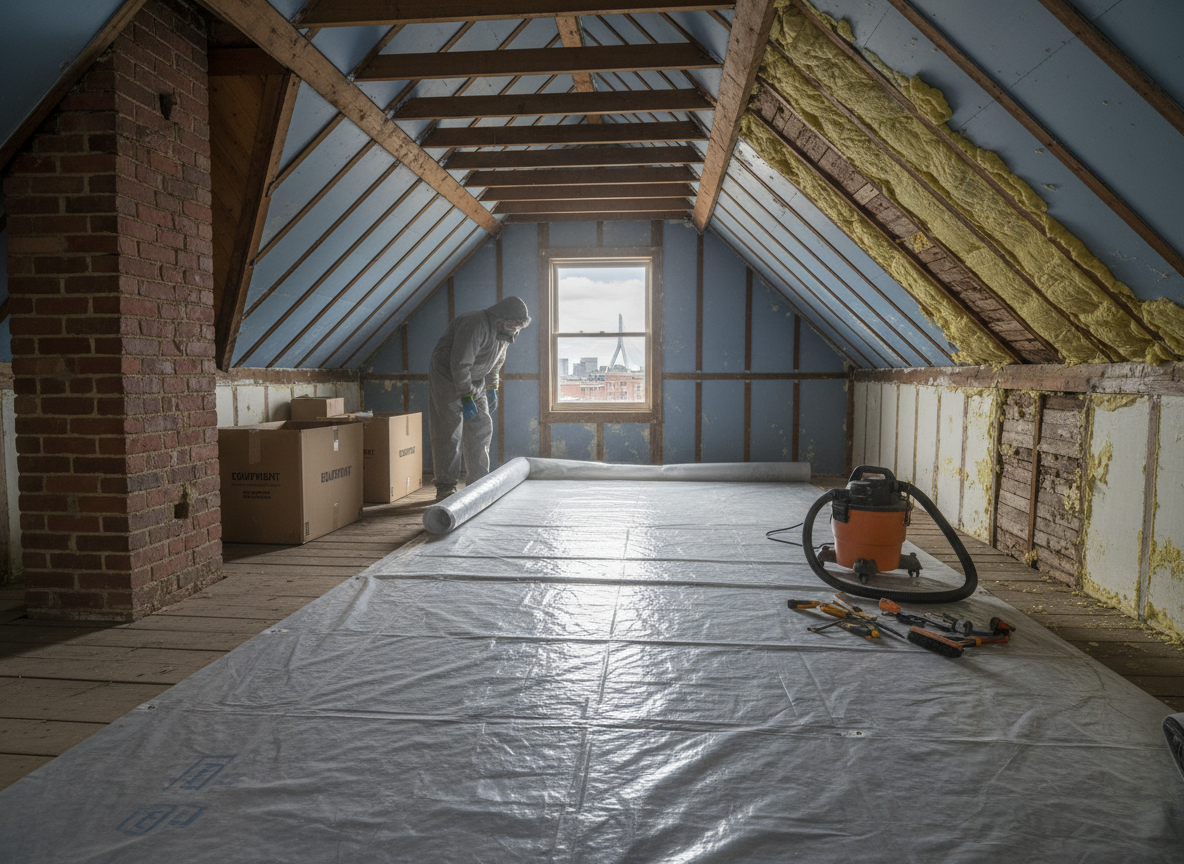
Start by inspecting the full attic floor and roof void to identify stored items, loose boards and any wiring that will need temporary relocation. In Boston properties built before 1950, narrow loft hatches and limited headroom often require extra time to create safe working access.
Inspect and Document Existing Conditions
Walk the entire attic space and note the type of spray foam present, whether open cell or closed cell, along with any signs of moisture staining on rafters. Older Boston terraces and semi-detached homes frequently have original lath and plaster ceilings below, which can be fragile when disturbed. Photograph every area and mark joist locations on a simple sketch so the removal team can avoid cutting through hidden cables or pipes. This record also helps when discussing the job with mortgage lenders who require evidence of insulation removal. Properties along Strait Bargate and nearby streets often share party walls, so note any shared insulation that may need separate handling.
Clear Stored Items and Create Access Routes
Remove all boxes, insulation offcuts and seasonal decorations at least one week before the crew arrives. In Lincolnshire homes, attics commonly hold decades of accumulated items because of limited ground-floor storage, so allow extra time for this step. Clear a minimum 1-metre-wide path from the hatch to the furthest point of work and stack remaining items against external walls only. If the hatch is located in a bedroom or landing, lay dust sheets and temporary boarding on the stairs to protect carpets. Boston’s older housing stock often features steep, narrow staircases, making it essential to plan how larger debris bags will exit the property without damaging plasterwork.
Protect Surfaces and Services
Cover loft insulation, water tanks and electrical consumer units with heavy-duty polythene sheeting secured with tape. In the damp Lincolnshire climate, any water pipes running through the attic should be insulated and clearly marked so they are not accidentally struck during removal. Seal gaps around the hatch with tape to limit dust migration into living areas. Many Boston properties still retain original timber floors in the loft; place plywood sheets over these to distribute weight and prevent boards from cracking under equipment. If your home has a thatched or tiled roof, confirm that the removal method will not dislodge tiles or let rain enter during the work window.
Plan for Post-Removal Checks
Arrange for an insulation assessment once the foam is gone so any hidden roof leaks can be repaired before new insulation is considered. Residents in surrounding villages such as Kirton and Wrangle often schedule this follow-up within 48 hours because coastal winds can drive moisture into exposed roof voids quickly. Review the related article on managing condensation after spray foam removal in Lincolnshire to understand ventilation upgrades that may be needed. Homeowners can also read what spray foam removal typically costs in Lincolnshire to budget for any additional timber treatment or boarding repairs that surface during the job. ClearSeal Solutions operates 24/7 from Strait Bargate and can coordinate these checks as part of the attic spray foam removal process.