2026-10-22 ·
Signs of Spray Foam Failure in Boston Lincolnshire Homes
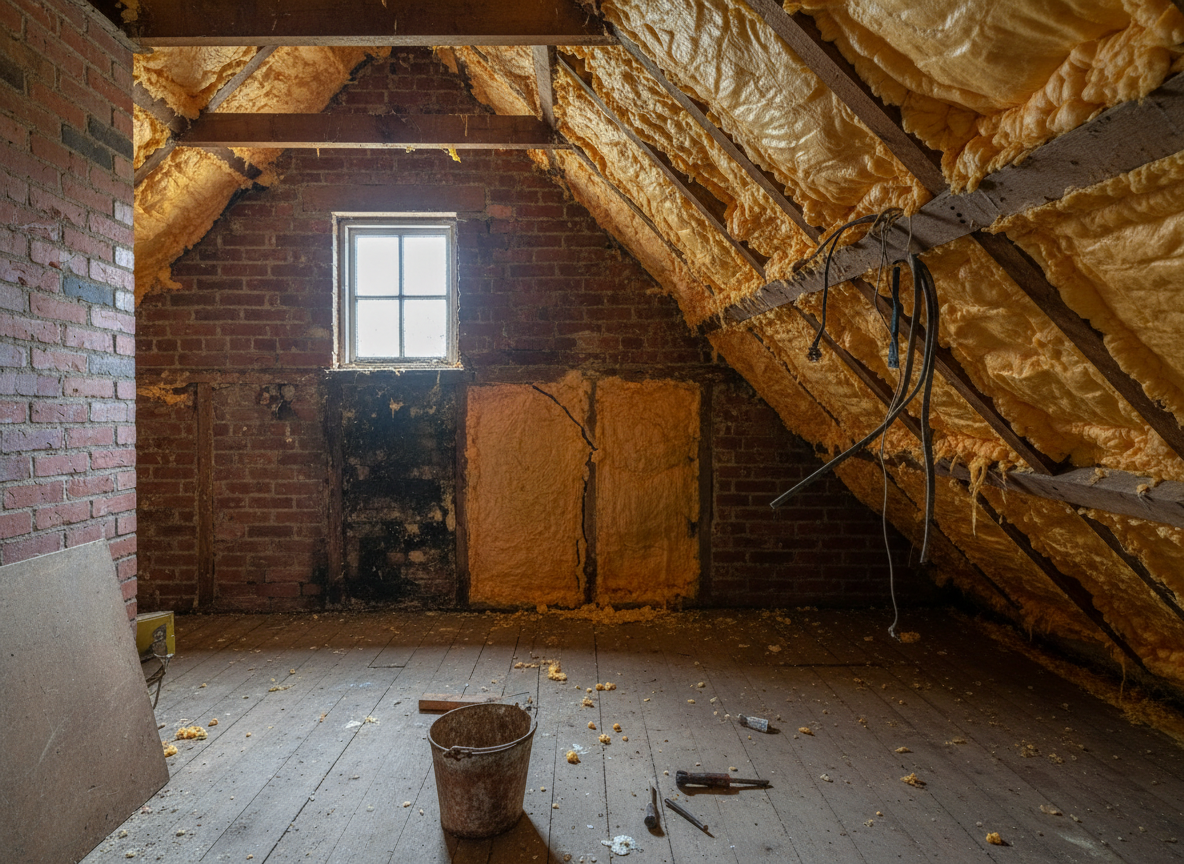
Spray foam failure in Boston Lincolnshire homes shows up most often as yellow-brown staining on ceilings, musty loft odors and increased wall condensation after 8-12 years in the area's damp fenland conditions. These signs appear first in properties built before 1970 where closed cell foam was applied over original lath and plaster without adequate ventilation.
Visible Staining on Ceilings and Walls
Yellow or brown discoloration spreading from loft hatches or external walls signals water trapped behind failed spray foam in Boston homes. The region's frequent rainfall and high water table allow moisture to migrate through mortar joints in Victorian terraces along Strait Bargate and similar streets, breaking down the foam's closed cell structure. Homeowners notice these marks widening during winter when indoor heating meets cold external temperatures. Checking the loft space with a torch reveals darkened insulation edges where water has pooled. In many cases the staining follows the line of rafters because the foam no longer seals the roof deck. Early inspection prevents the stain from reaching plasterboard ceilings below.
Persistent Musty Odors in Lofts
A damp, earthy smell that returns within hours of opening loft hatches points to mold growth inside deteriorating spray foam layers common in Lincolnshire properties. Boston's cool, humid winters keep relative humidity above 80 percent for months, allowing spores to thrive once the foam loses adhesion. The odor strengthens near eaves where airflow is poorest. Residents in Kirton and Wrangle report the smell drifting downstairs through ceiling cracks when the heating is on. This issue differs from simple condensation because it persists even after ventilation improvements. Professional assessment identifies whether the foam has delaminated from the roof timbers or absorbed groundwater salts typical of the local clay soils.
Increased Condensation and Energy Loss
Windows and internal walls that stream with moisture during cold snaps indicate the spray foam no longer controls temperature in Boston attics. Lincolnshire's winter lows often drop below freezing, and failed insulation allows warm air to reach cold roof surfaces, creating the cycle. Older homes around the market place lose heat faster once the foam cracks, pushing heating costs up noticeably. Cavity walls in interwar semis show similar patterns when foam injected years ago shrinks. Linking this to mortgage surveys is useful because lenders now flag such installations. Readers can explore further details in Why Older Boston Properties Often Require Spray Foam Extraction and arrange an insulation assessment to measure remaining R-values.
When Professional Removal Becomes Necessary
Once staining covers more than a square metre or odors affect living spaces, removal prevents further timber decay in Boston roofs. Local teams use methods suited to the tight roof voids found in PE21 postcode properties. Homeowners in Spalding and Holbeach facing similar fenland conditions follow the same timeline. Prompt action avoids escalation into full roof repairs. Further reading on post-removal moisture control appears in Managing Condensation After Spray Foam Removal in Lincolnshire. For loft-specific work see loft spray foam removal.