2026-10-22 ·
Why Older Boston Properties Often Require Spray Foam Extraction
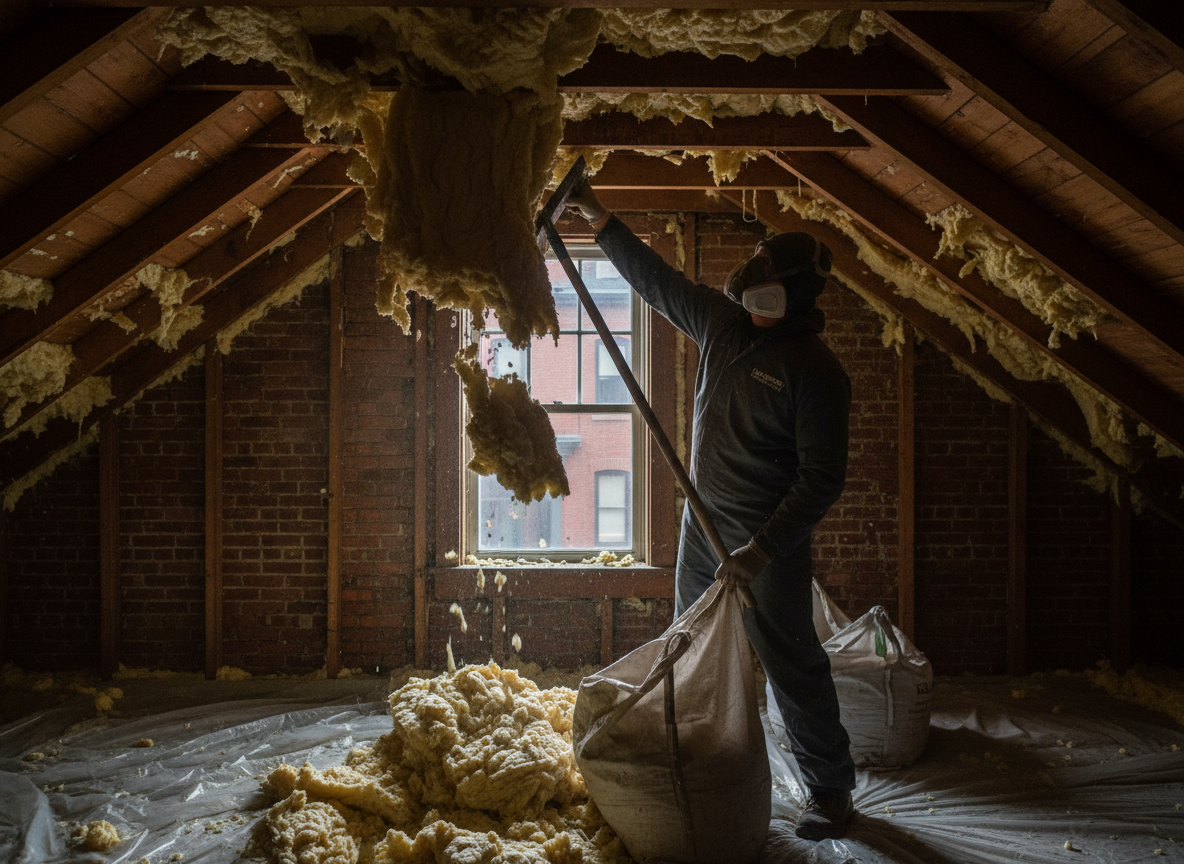
Older Boston properties often require spray foam extraction because closed-cell foam traps moisture against solid masonry walls and unventilated roof spaces typical of pre-1950 homes in the town centre and surrounding villages. This creates condensation buildup that accelerates timber decay, especially during prolonged wet winters when rainfall exceeds 600mm annually across Lincolnshire.
Housing Stock Challenges in Boston
Boston's older housing stock includes Victorian terraces along streets near Strait Bargate and Edwardian semis in Kirton and Wrangle. These homes commonly feature solid brick walls without cavities and pitched roofs with minimal original ventilation. Spray foam applied directly to rafters in the 2000s sealed these spaces, preventing any drying airflow. Over 8–15 years the trapped vapour raises timber moisture content above 20%, leading to visible mould on joists and sagging ceilings. Local roofers report increased callouts for rotted barge boards and fascia on properties where foam remains in place. Extraction restores airflow and allows proper inspection of structural timbers before further damage occurs.
Moisture and Seasonal Weather Patterns
Lincolnshire's flat terrain and proximity to the Wash create high humidity levels year-round, with winter temperatures frequently dropping below 5°C. In Boston this means loft spaces stay cold while internal heat rises, driving condensation onto foam faces. Unlike modern ventilated constructions, older properties lack the eaves gaps or ridge vents needed to disperse this moisture. Homeowners in Spalding and Holbeach report similar patterns after foam installations from the early 2010s. Removing the foam allows installation of breathable insulation and proper ventilation that matches the original building physics rather than fighting it.
Mortgage Lender Requirements
Many mortgage lenders now refuse to advance funds on Boston properties with spray foam in lofts or cavity walls unless extraction is completed and documented. Surveyors flag the material because it prevents visual checks for roof leaks and can hide damp penetration through solid walls. Properties listed for sale in Sleaford and Donington have experienced delays of 4–8 weeks while owners arrange removal. Linking to a full cost breakdown helps homeowners budget: What Spray Foam Removal Typically Costs in Lincolnshire. Extraction followed by a written assessment often satisfies lender conditions and allows transactions to proceed.
Recognising When Extraction Is Necessary
Key indicators include persistent musty smells in upstairs rooms, black mould along ceiling edges, and higher heating bills as trapped moisture reduces insulation performance. In Boston's older stock, foam applied over electrical cables or pipework also creates fire and leak risks that only become apparent during removal. Professional teams using dry ice blasting or thermal methods minimise dust while reaching rafters and joists. Homeowners can review preparation steps in advance: How to Prepare Your Attic for Spray Foam Removal. Early action prevents escalation into full roof repairs.
Practical Next Steps for Boston Homeowners
Contact ClearSeal Solutions at Strait Bargate, Boston, Lincolnshire, PE216LW for a site visit available 24/7. Assessment identifies whether loft, attic or cavity wall foam needs removal and which method suits the property age. Post-extraction, managing residual condensation becomes straightforward with added ventilation: Managing Condensation After Spray Foam Removal in Lincolnshire. Local teams familiar with Boston's housing stock complete work without damaging original timbers, restoring the building's ability to breathe naturally.